

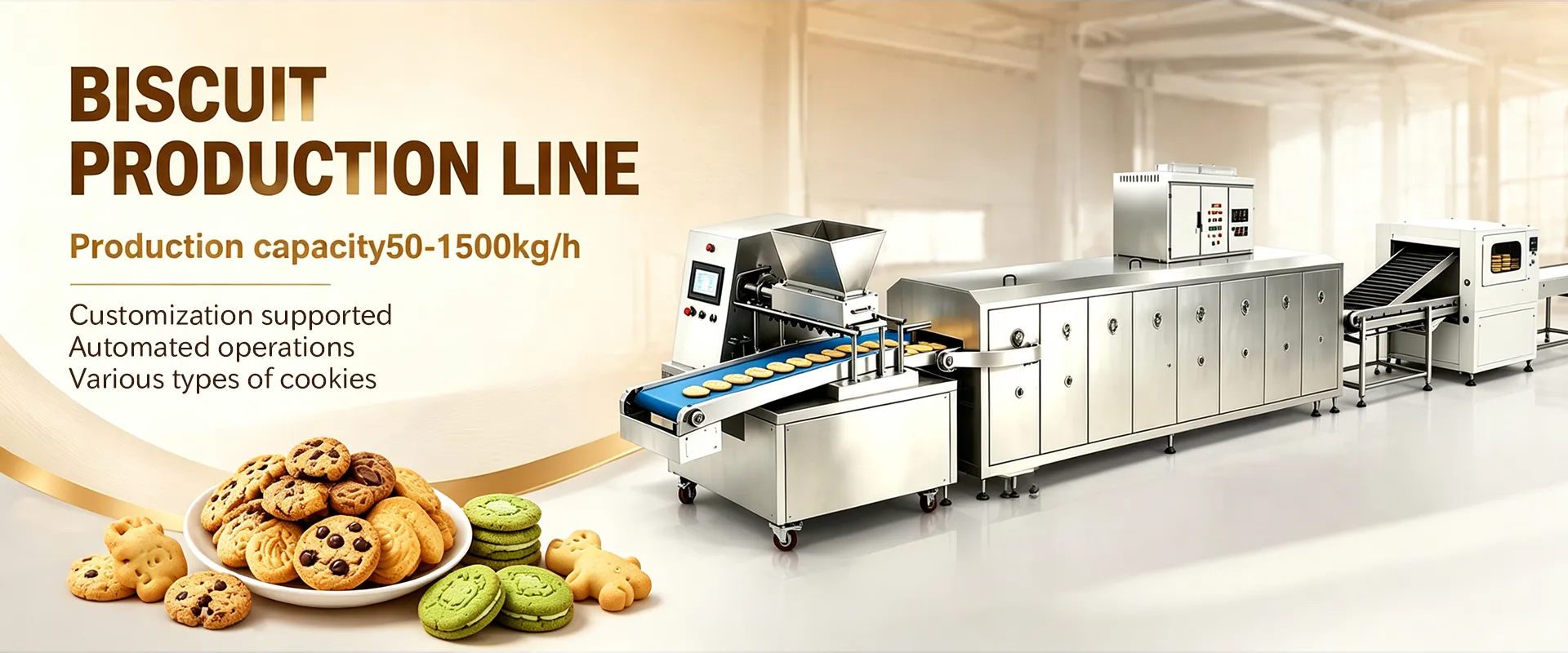
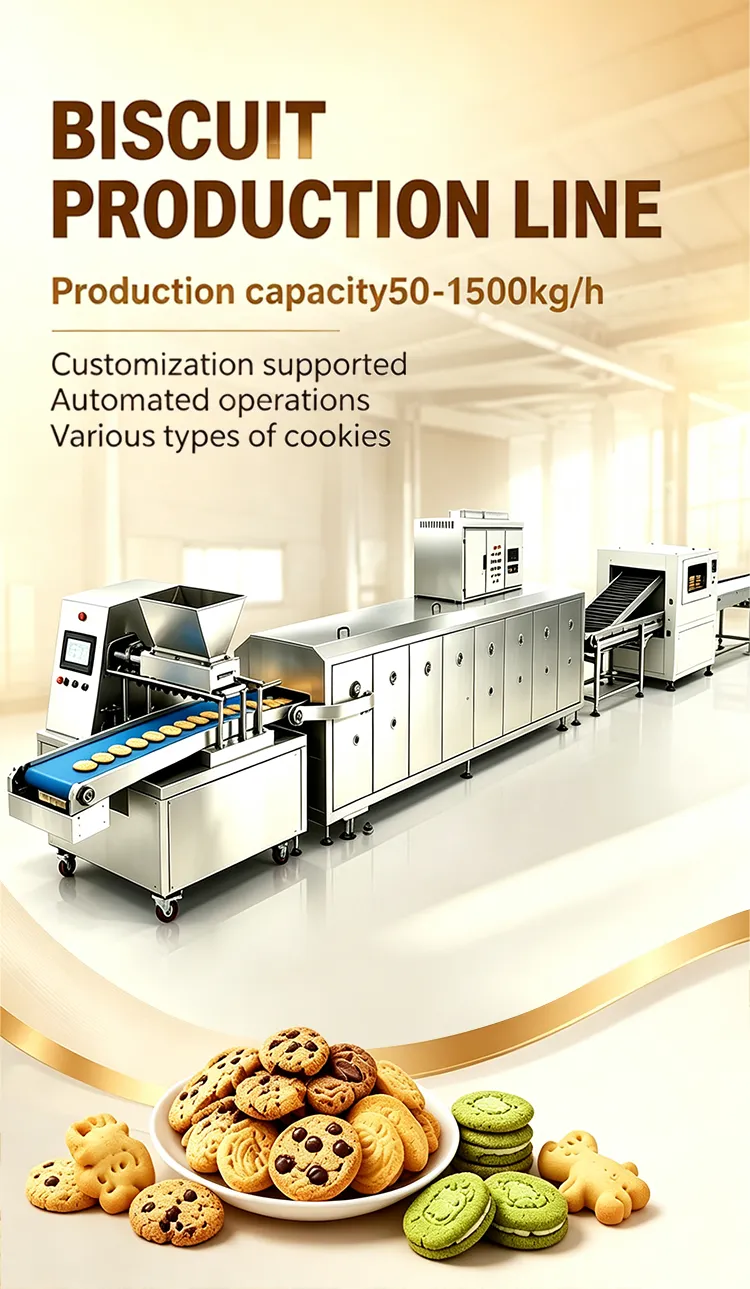
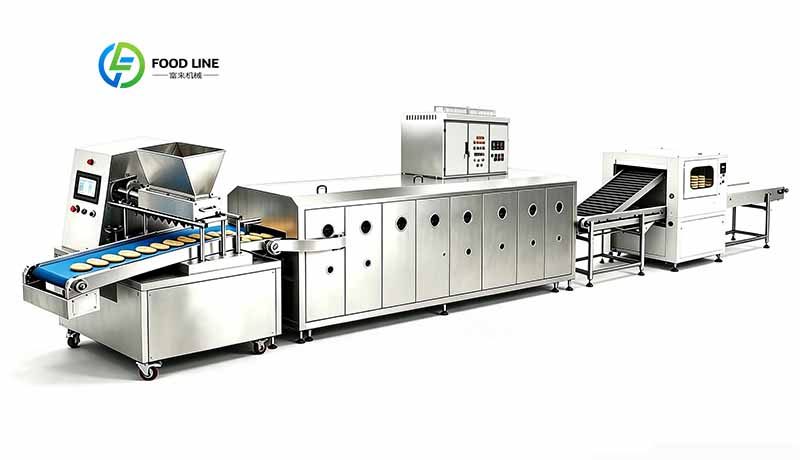
Our industrial-grade cookie production line integrates advanced mechanical automation from precise dough mixing to high-speed forming, uniform baking, cooling, and sorting. Designed to meet strict international standards, this fully automatic processing line significantly reduces labor costs while maximizing production efficiency and consistency.
Ready to upgrade your bakery factory? Contact our engineering team for a customized layout and factory direct pricing today!
With quick-change moulds and precise depositors, our cookie manufacturing line empowers food factories to produce various types of popular commercial biscuits and cookies with distinct shapes and textures.
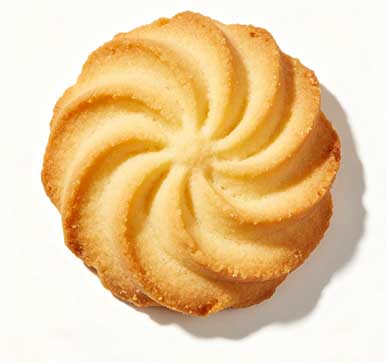
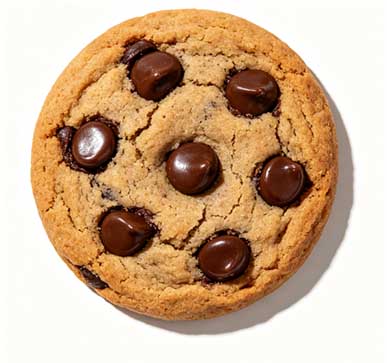

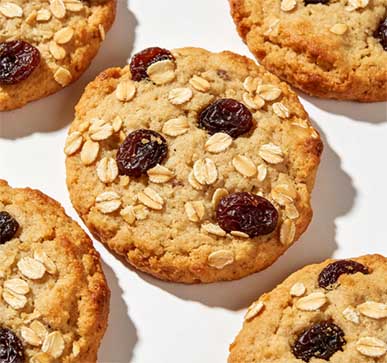
Whether you aim to produce traditional wire-cut cookies, crisp butter shortbread, or decadent chocolate-chip cookies, our flexible system adapts seamlessly to your recipe demands.
Engineered with robust stainless steel and intelligent PLC control panels, our production lines stand out in the global market for exceptional reliability:
A streamlined workflow ensures consistent taste, texture, and extended shelf life for every batch produced in your facility.
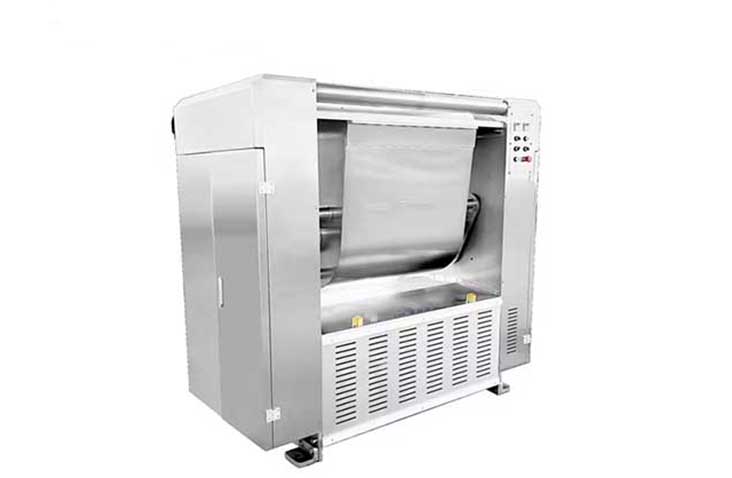
Premium flour, sugar, and dairy ingredients are blended evenly and rapidly using heavy-duty industrial dough mixers to establish an ideal gluten network.
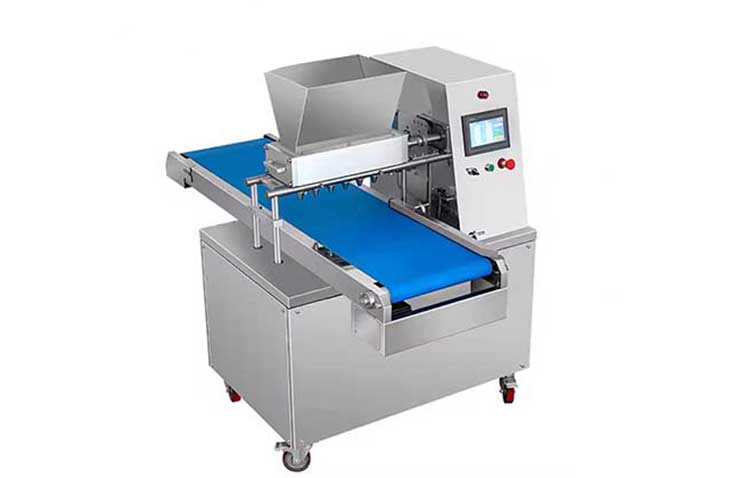
Bulk dough is automatically fed into high-precision forming machines, utilizing wire-cut depositors or rotary molders to shape cookies accurately.
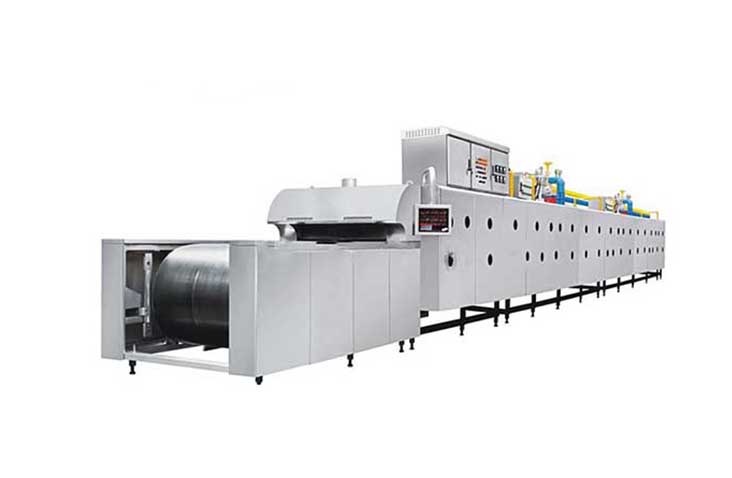
Formed cookie pieces pass through mesh or steel belt tunnel/convection ovens, baking evenly under scientifically optimized multi-zone heat distribution.
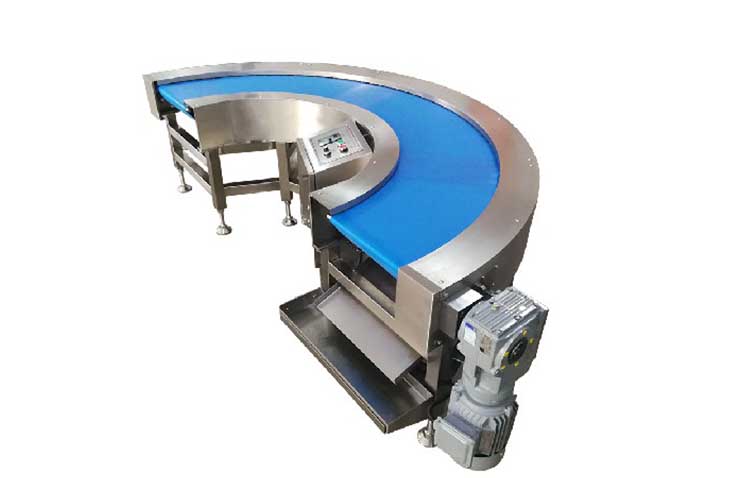
Freshly baked hot cookies travel through extended cooling conveyors, effectively reducing product temperature to ambient levels safely prior to packaging.
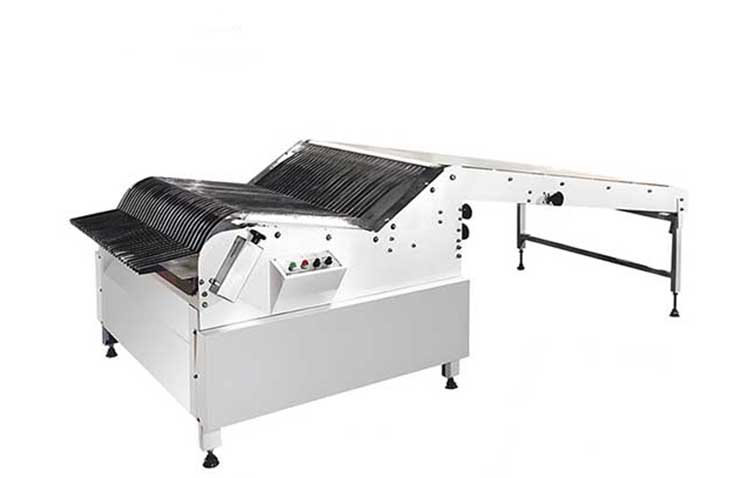
Advanced penny stackers and alignment mechanisms organize loose cookies into neat rows, ensuring smooth feeding into high-speed wrapping equipment.
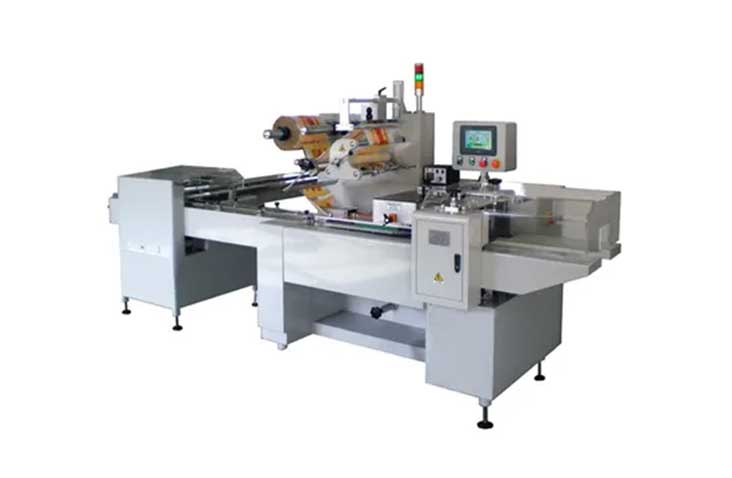
The entire system culminates in seamless integration with automated pillow-pack or carton packaging units for ultimate hygiene and efficiency.
Below are the standard specifications of key machinery components in our cookie production line. Custom widths and capacities are available upon request.
| Machine Category | Model | Production Capacity | Power | Dimension (L*W*H mm) | Weight |
|---|---|---|---|---|---|
| Dough Mixer | FL-T-75 | 75kg Dough amount | 4KW | 1188*710*1220 | 500kg |
| FL-K-300 | 500kg Dough amount | 28KW | 2400*1550*1996 | 2200kg | |
| Cookie Forming Machine | FL-K-400 | 80-150KG/H | 0.75KW | 1200*1000*1250 | 400kg |
| FL-K-600 | 90-120KG/H | 0.75KW | 1300*1200*1250 | 600kg |
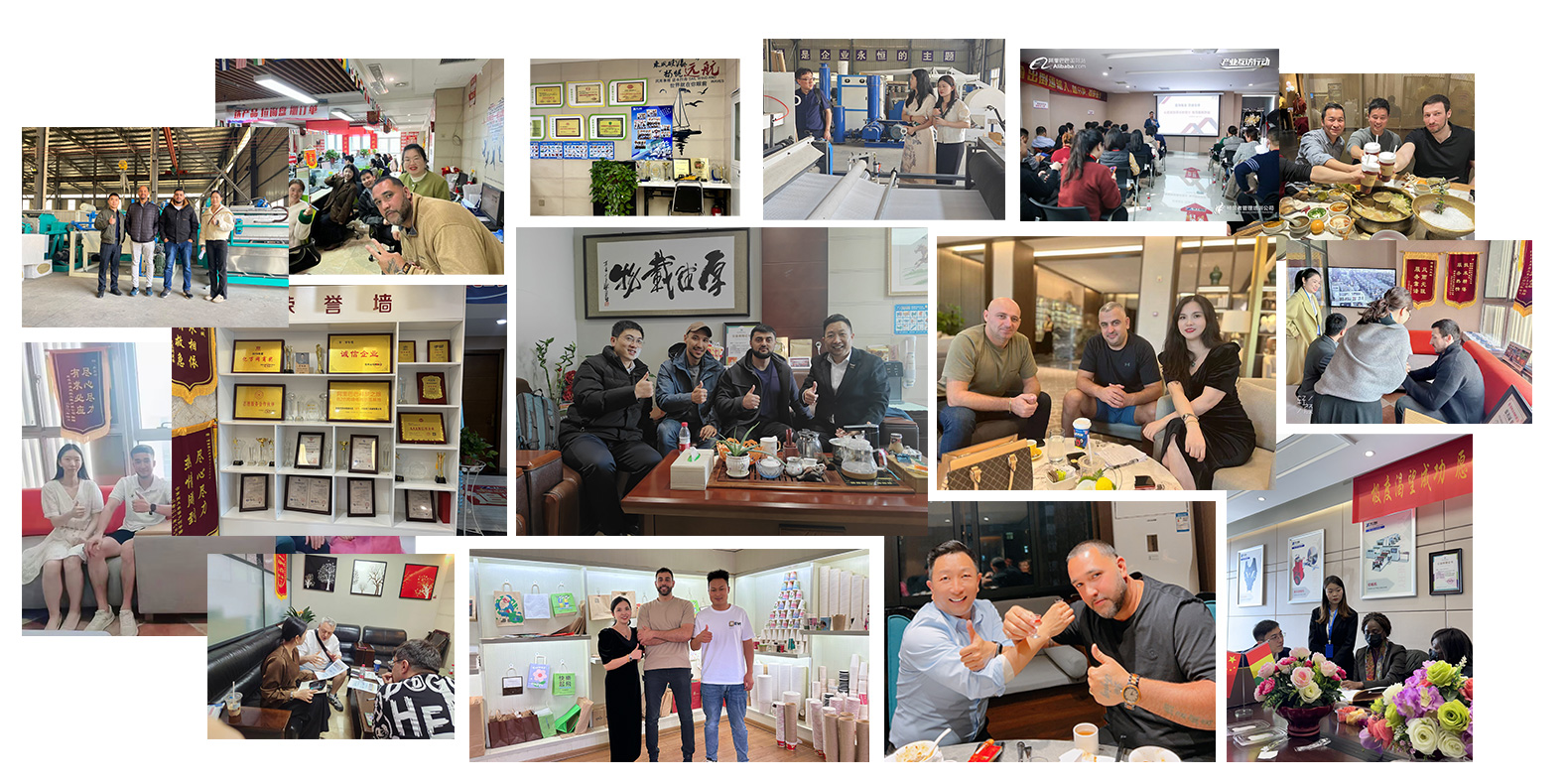
We are a professional food machinery manufacturer dedicated to delivering turnkey baking solutions, including complete cookie and biscuit production lines, individual mixers, forming machines, and tunnel ovens. Our equipment has been successfully exported worldwide, backed by reliable warranties and professional overseas support.
Have questions regarding line setup or investment budgets? Reach out to our specialists directly:
📞 Phone/WhatsApp: +86 13733812017
✉️ Email: office@foodlinemachine.com
Explore our complementary food processing machinery to expand your production lines:
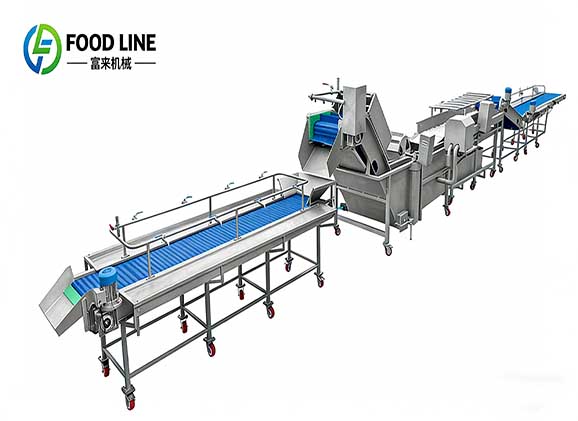
Fruits & Vegetables Processing Line
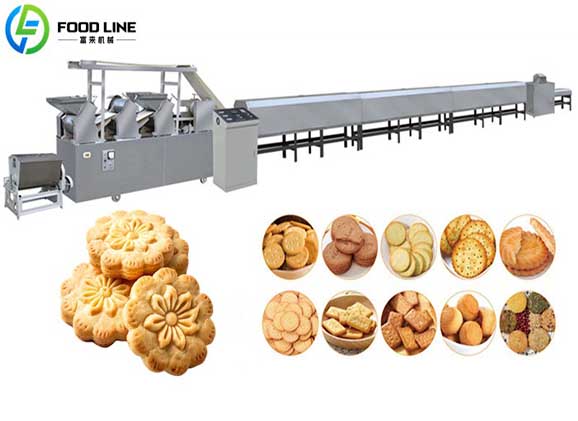
Hard Biscuit Making Line
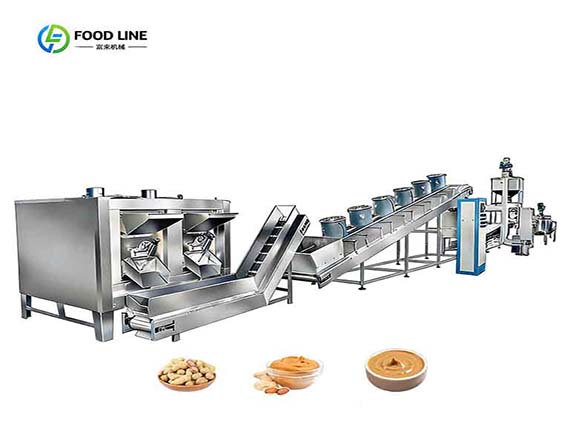
Peanut Butter Processing Line
Contact our technical experts now to get tailored equipment advice and professional quotations within 24 hours.

 5F, Block B, Jingsha Plaza, No.8 Jingguang South Road, Erqi District, Zhengzhou, Henan,
China
5F, Block B, Jingsha Plaza, No.8 Jingguang South Road, Erqi District, Zhengzhou, Henan,
China
 Tel/WhatsApp:+8613733812017


 Email: